

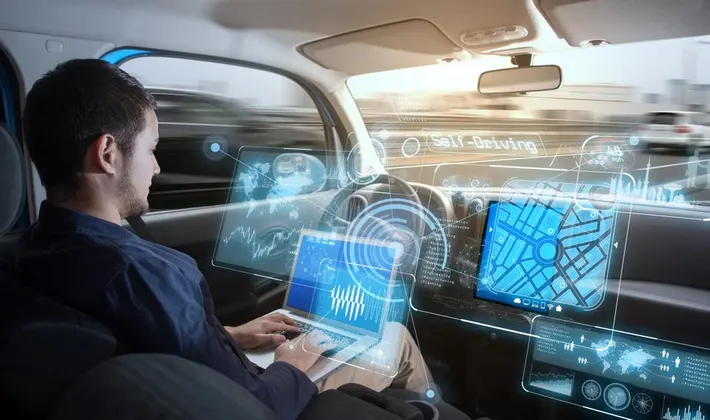
The automobile—once a marvel of industrial ambition—has evolved into a cultural icon, an economic engine, and a central character in the narrative of modern life. Its journey from rudimentary horseless carriages to sleek, self-driving electric vehicles reflects more than just technological advancement. It encapsulates societal shifts, human aspirations, and the constant push-pull between freedom and responsibility.
At its core, the automobile is a symbol of mobility. The early 20th century saw the Model T Ford roll off assembly lines, bringing with it an unprecedented democratization of transport. Where travel was once a luxury or necessity afforded only to the wealthy or the daring, cars allowed ordinary individuals to break beyond the constraints of geography. Families could journey across states, workers could commute from suburban homes to urban centers, and entire economies were reshaped around roads, fuels, and mechanized mobility.
Yet, the automobile quickly became more than just a means of travel. It emerged as an extension of self. The car one drives has long served as a silent declaration—of status, taste, and even values. A rugged SUV might hint at a love for the outdoors, while a sleek European sedan might suggest an affinity for refinement and performance. This symbolic role endures, especially as manufacturers continue to target lifestyle over utility, framing each vehicle not just as a machine, but as a companion in one’s personal narrative.
However, the rise of the automobile has not been without consequence. Urban landscapes were dramatically reshaped to accommodate them. Cities widened roads, constructed overpasses, and sacrificed pedestrian zones to the needs of vehicular flow. Suburbia, that quintessential symbol of mid-20th-century prosperity, owes much of its existence to the car. Entire communities were designed around the assumption of automobile ownership, leading to sprawling developments, congested highways, and an increasing dependence on fossil fuels.
Environmental concerns, once a quiet murmur among specialists, have grown into a resounding global outcry. The automobile, once a beacon of progress, became a scapegoat for environmental degradation. Smog-choked skies in megacities, rising carbon emissions, and the sheer scale of resource consumption prompted a re-evaluation of its role in modern life. In response, the automotive industry embarked on a new chapter—one marked by innovation and responsibility.
Enter the electric vehicle (EV). Though not a new concept—early 20th-century inventors had toyed with electric motors—EVs have, in recent years, reached a point of mass viability. Spearheaded by companies like Tesla and followed by nearly every major automaker, electric cars have redefined what it means to drive. These are not merely greener alternatives; they often outperform their combustion-engine counterparts in acceleration, responsiveness, and design. Yet the transition to electric is not merely about what powers the car. It reflects a deeper shift in mindset—from ownership to sustainability, from horsepower to efficiency.
Simultaneously, the concept of driving itself is being reimagined. Autonomous vehicles, once the stuff of science fiction, are now being tested on public roads. The promise is tantalizing: fewer accidents, reduced congestion, and newfound time for drivers turned passengers. But autonomy introduces a maze of ethical, legal, and social challenges. Who bears responsibility in a collision? How do we program cars to make moral decisions? What does freedom mean in a world where driving may no longer be a personal act, but a service?
Moreover, the very notion of car ownership is evolving. Urban millennials and Gen Z consumers increasingly view cars not as essential milestones, but as burdensome expenses. Ride-sharing platforms, car subscription services, and integrated public transportation options challenge the traditional auto market. In dense cities, practicality and sustainability often trump the allure of personal vehicles.
Yet, despite these seismic shifts, the emotional connection to cars endures. There is something undeniably poetic about the hum of an engine on an open road, the shared silence of a late-night drive, the memories carved into road trips and first cars. Even in a future dominated by AI and electric powertrains, the romance of the automobile is unlikely to fade.
Automotive design continues to push boundaries, blending technology with art. From the futuristic minimalism of EV interiors to the aggressive curves of high-performance coupes, design reflects the human desire not only to move, but to do so beautifully. Manufacturers are also embracing a global perspective, drawing inspiration from diverse cultures and customer needs. Compact city cars in Tokyo, luxurious sedans in Berlin, rugged trucks in Texas—each reflects a local story shaped by global forces.
In many ways, the story of the automobile mirrors our own. It is a story of ambition—of chasing the horizon, of building faster, better, smarter machines. It is also a story of reflection—of recognizing the costs of unchecked growth and seeking balance. As we stand on the threshold of a new automotive era, the questions we face are not just about torque and range, but about values and vision.
Will the car of the future be a shared pod or a personalized sanctuary? Will we still chase speed, or will silence and sustainability become the new luxuries? The answers lie not just in engineering labs, but in our collective decisions as consumers, citizens, and stewards of the planet.
The automobile is more than metal and motion. It is a canvas upon which we project our hopes, fears, and identities. As it continues to evolve, it invites us to reconsider not just how we move, but who we are—and who we wish to become.
